
ADVANCED COMMERCIAL ENERGY
High-efficiency motive and industrial lithium power. Delivering 4,000+ deep discharge cycles, rapid 1-2 hour recharge turnaround, 65% weight savings, and zero routine maintenance for fleets and critical equipment.
TECHNOLOGY FOUNDATION
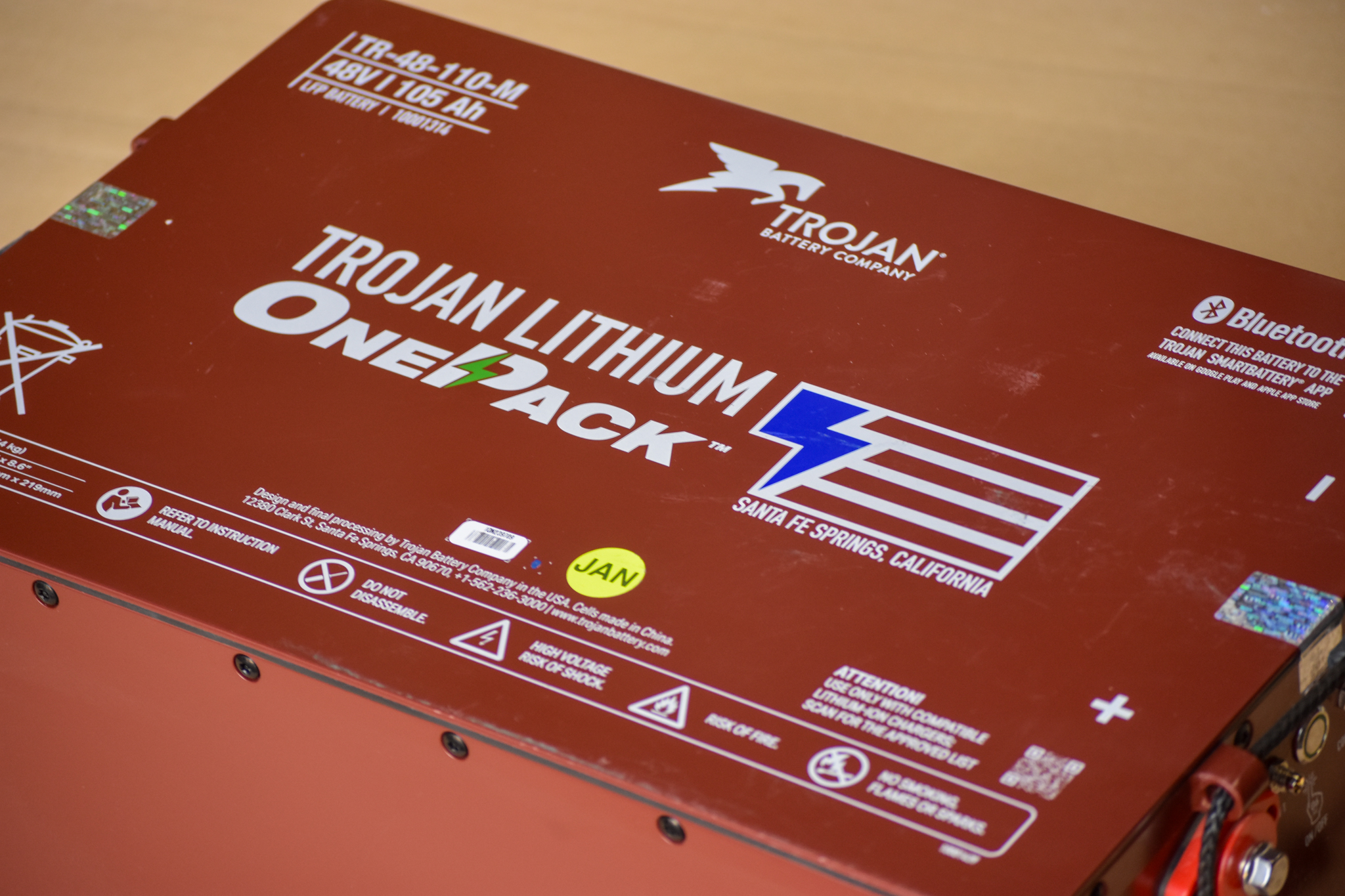
Lithium Iron Phosphate (LiFePO4) is the premier chemical standard for commercial, motive, and industrial energy storage. Unlike consumer lithium-ion batteries that utilize cobalt, LiFePO4 offers unmatched chemical stability, exceptional thermal threshold resistance, and complete safety in rugged environments.
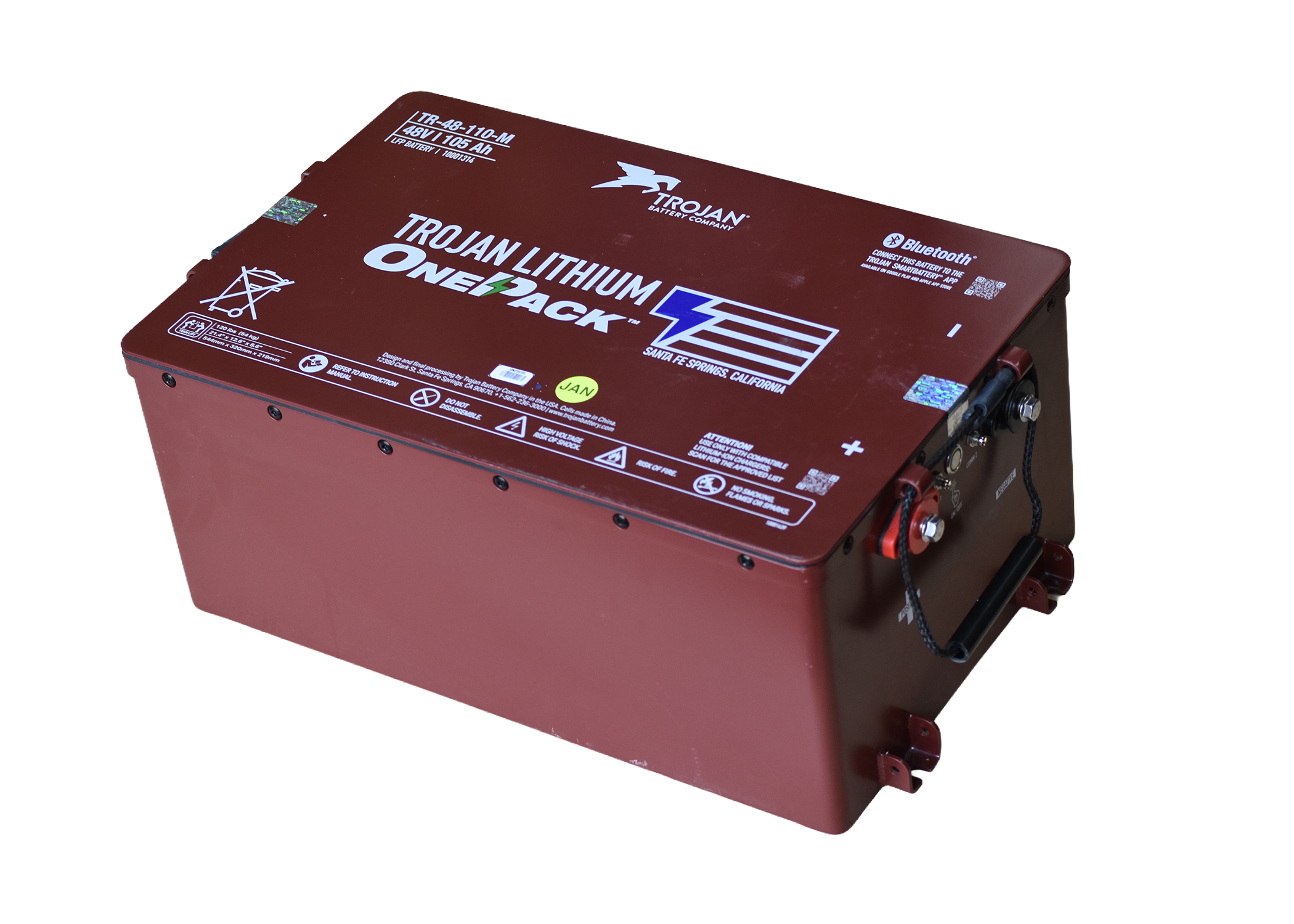
LiFePO4 has a chemical bond structure that cannot release oxygen under extreme temperatures or impact, eliminating thermal runaway risks.
Every commercial lithium battery includes an automated Battery Management System continuously monitoring individual cell balance, temperatures, and current.
Eliminates acid refills, watering systems, terminal post corrosion, and mandatory equalize charging cycles required by lead-acid.
Manufactured in single-piece drop-in sizes to replace 6V, 8V, 12V GC types for turnkey conversion of existing carts and equipment.
Golf & Resort Fleets
36V, 48V, and 72V drop-in packs providing 36+ holes per charge without mid-round voltage drop.
Aerial Lifts & Scrubbers
Fast opportunity charging during breaks with no loss in lift hydraulic speed or power.
Marine & RV Auxiliary
Ultra-dense house battery banks with 100% usable amp-hour capacity and rapid solar acceptance.
Solar & Off-Grid Storage
Tolerates partial state of charge (PSoC) indefinitely without plate sulfation or capacity degradation.
ENGINEERING DATA
Compare empirical metrics between Lithium Iron Phosphate and traditional lead-acid chemistries. Lithium consistently outpaces lead-acid across cycle durability, thermal resilience, and charge turnaround.
4,000+
Cycles at 80% DOD
Vs. 500-800 cycles on flooded
-65%
Weight Reduction
Reduces vehicle and turf strain
1–2 Hr
Full Recharge Window
Vs. 8-10 hours on conventional
99%
Coulombic Efficiency
Minimal wasted energy during charge
Performance Metric
Lithium LiFePO4
Flooded Deep Cycle
Standard AGM
Cycle Life (80% DOD)
3,500 – 5,000+ Cycles
500 – 800 Cycles
600 – 1,000 Cycles
Usable Usable Capacity
100% of Rated Capacity
50% Max Safe Depth
50% - 60% Max Safe Depth
Charge Time (0 to 100%)
1 – 2.5 Hours
8 – 10 Hours
7 – 9 Hours
Voltage Sag under Load
Flat Plateau (Zero Sag)
Continuous Linear Drop
Moderate Linear Drop
Weight per Usable kWh
Approx. 24 – 28 lbs
Approx. 130 – 150 lbs
Approx. 120 – 140 lbs
Self-Discharge Rate
< 2% per Month
10% – 15% per Month
3% – 5% per Month
Scheduled Maintenance
Zero (Fully Solid-State)
Monthly Water & Acid Check
Zero Watering (Terminal clean)
THE SCIENCE & RETURN ON INVESTMENT
Explore the electrochemical mechanics of lithium iron phosphate and examine how operational efficiency translates into substantial fleet lifecycle savings.
Lithium-ion energy storage is governed by reversible ion intercalation between positive and negative electrodes through an organic electrolyte medium.
When equipment draws power, lithium ions separate from the graphite anode and migrate across the porous separator into the stable iron-phosphate cathode lattice, generating electron flow through the external circuit.
Charging forces lithium ions back into the anode without damaging the crystalline matrix. Because the cathode possesses an indestructible olivine crystal structure, it does not degrade even after thousands of deep charge cycles.
The onboard BMS acts as the brain: it balances voltage across each internal cell series, shuts off charging if internal temperature drops below freezing, and prevents short circuits, overcharging, and deep under-voltage.
Upgrading to lithium transforms equipment performance, eliminates operational bottlenecks, and protects your capital investment.
Partial charges during 15-minute operator breaks or lunch hours do not degrade lithium longevity. Eliminates battery swapping rooms and multi-pack rotations.
Unlike lead-acid where carts or scissor lifts slow down as voltage drops throughout the afternoon, lithium sustains full torque and hydraulic speed right up to 99% discharge.
Removing 300+ lbs of dead weight per utility cart reduces wear on suspension, brakes, tires, and transaxles while significantly cutting soil compaction on pristine turf.
COMMERCIAL COST ANALYSIS
While lithium requires higher initial capital expenditure than flooded lead-acid, lead-acid batteries must be replaced 4 to 5 times over the same operating lifespan. Factor in maintenance labor, watering systems, and downtime, and lithium yields an average 40% to 60% total cost of ownership reduction.
Zero Labor Hours
Saves an estimated 40+ technician hours per cart annually in watering, acid cleanup, and testing.
1 Pack Replaces 4-5
A single LiFePO4 battery lasts 10+ years under daily commercial discharge cycles.
Electricity Efficiency
99% charge efficiency saves 15% to 25% on facility charging power consumption annually.
Speak with our technical specialists in Tigard or Eugene to evaluate your fleet's amp-hour demand, charger compatibility, and ROI timeline.